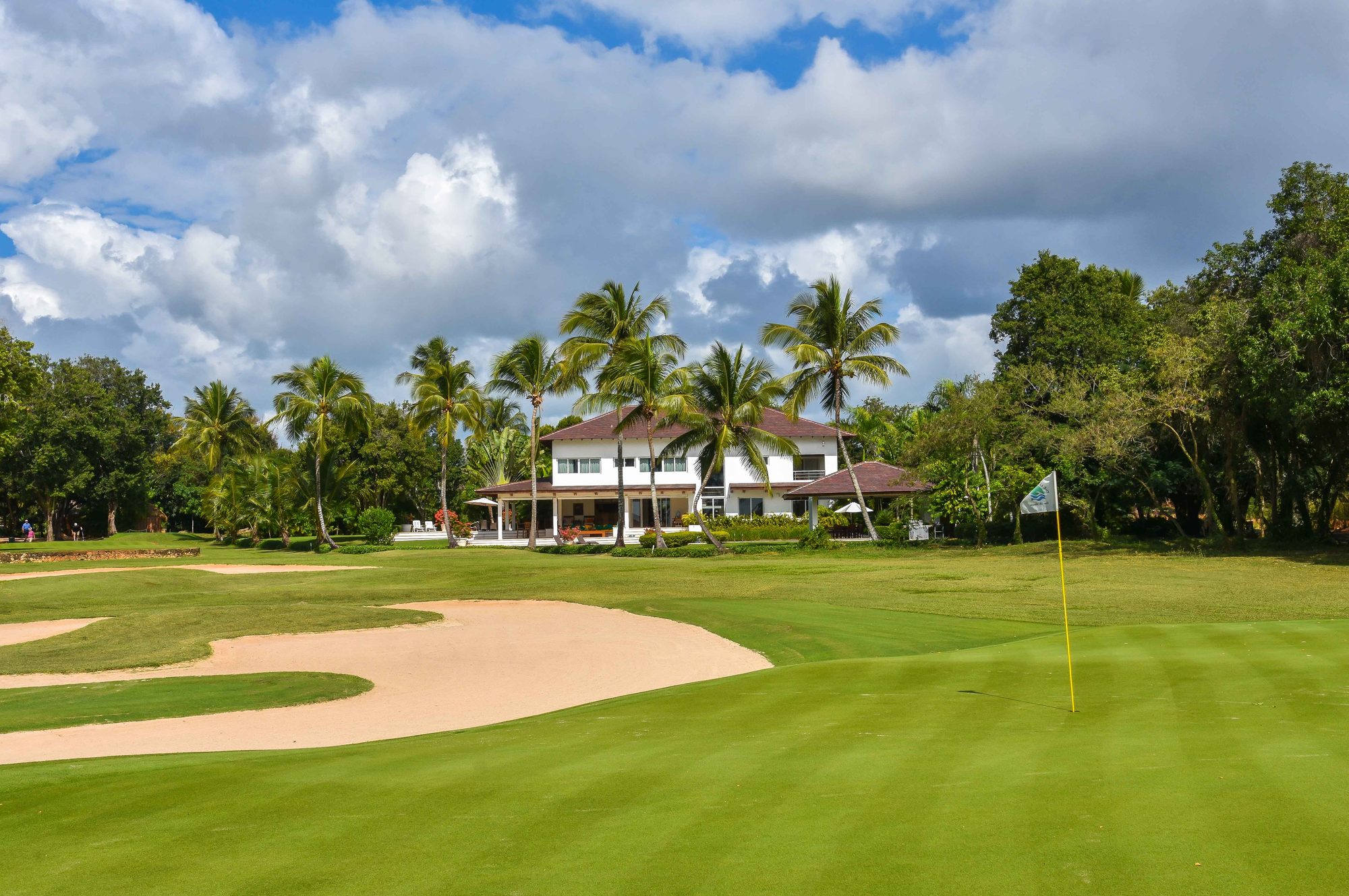
The Links doesn’t get the same attention as Teeth of the Dog or Dye Fore, and that’s been the story of this course since 1976. It’s the most accessible of the three resort courses, the one most packages use as an opening round, and it has a backstory that golf architecture fans find genuinely fascinating once they know to look.
The History
Pete Dye opened The Links in 1976, five years after Teeth of the Dog established Casa de Campo as a world-class golf destination. Where Teeth of the Dog was carved from coral rock by hundreds of Dominican laborers working entirely by hand, The Links was built in a more conventional inland setting, giving Dye room to develop a different kind of course entirely. The design drew on the wide, flat fairways bending in S-shapes around hazards that Dye was beginning to build up and down the east coast of Florida at the same time, with a Scottish influence in the undulating terrain, and steep elevated greens that rewarded approach precision over power.
What makes The Links particularly interesting to golf architecture followers is the crew Dye assembled to build it. Alongside his son P.B., the project employed a young Lee Schmidt, who would later go on to partner with Brian Curley and design courses all over the world, and a young Bill Coore, who would eventually become one of the most celebrated architects in the game through his partnership with Ben Crenshaw. Walking The Links knowing that Coore and Crenshaw’s Sand Hills, Friar’s Head, and Bandon Trails all trace back in part to what Coore learned on this job puts the course in a different light.
Dye remodeled The Links comprehensively in 2011 and 2012, breaking up the large waste bunkers from the original design into smaller, more individualized hazards and rebuilding all of the greens from scratch. It reopened in early 2012 and has been in strong condition since.
The Golf
The Links plays as a genuine inland challenge at just over 7,000 yards, with five holes where water directly threatens the line. The moderately hilly fairways and elevated greens demand accurate approach play, and the bunkering, now tightened from the 2012 renovation, penalizes imprecision in a way the wide landing areas off the tee don’t always telegraph. Pete Dye himself noted that the greens on The Links were some of the best he ever created, and the short game demands here consistently catch players off guard.
It’s the most forgiving tee-to-green of the three resort courses, and most multi-round packages at Casa de Campo sensibly use it as the opening day round before Teeth of the Dog and Dye Fore take over. That reputation sometimes overshadows what is genuinely a Pete Dye course worth playing on its own terms, not just as a warm-up act.
Want to build a Casa de Campo golf trip? Coastal Golfaway has been packaging stay-and-play golf vacations since 1986. Reach out and we’ll put it together.